Our Research Pillars
The science behind TACII
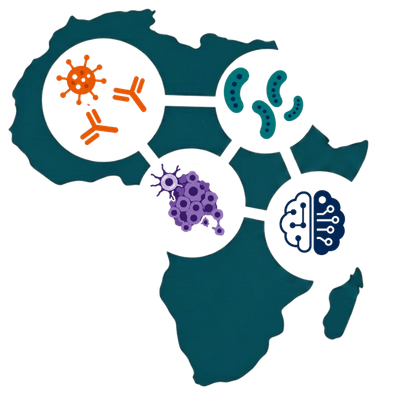
TACII's research is built around four interconnected pillars that explore how infections, immunity, the microbiome, and artificial intelligence together shape cancer research across Africa.
 Pillar 01
Infection, immunity and cancer
African infections shape cancer
In Africa, infection is a direct driver of cancer, causing an estimated 25–30% of cases—two to three times higher than in high-income nations. This profoundly shapes tumour development and treatment responses.
Oncogenic Pathogens
Prevalent pathogens across Africa include HPV, HBV/HCV, EBV, and HIV, which substantially raise malignancy risks. Beyond viruses, chronic bacterial and parasitic co-infections generate complex immune disruptions rarely seen elsewhere.
Shaping tumour biology
Infection-associated cancers carry unique mutational signatures and distinct immune microenvironments, directly impacting immunotherapy responses. TACII investigates 'trained immunity'—how repeated pathogen exposure reprograms innate immune cells.
 Pillar 02
The Microbiome
A novel dimension of African cancer biology
The microbiome plays a significant role in shaping immune function and cancer risk. Yet, African populations—possessing the world's most diverse microbiomes—remain chronically under-researched.
Microbial communities vary widely across Africa's diverse ecologies. Emerging evidence shows the microbiome directly influences carcinogenesis and modulates patient responses to immunotherapy.
In African settings, the interplay of infectious exposure, immune modulation, and microbial diversity creates distinct cancer biology networks. TACII characterises this diversity to generate locally actionable and globally relevant insights.
 Pillar 03
Tumour immune microenvironment (TIME)
How tumours evade immunity in African patients
The tumour immune microenvironment (TIME) is the complex ecosystem determining whether the immune system fights or tolerates cancer. In Africa, unique immune histories profoundly shape this ecosystem.
Repeated exposure to infectious pathogens produces patterns of chronic immune activation and exhaustion significantly different from high-income settings. This potentially explains varying immunotherapy responses in African patients.
Systematic profiling of the TIME in African patients remains limited. Through multi-omics, spatial biology, and AI, TACII is building the high-resolution infrastructure needed to identify population-specific biomarkers at scale.
 Pillar 04
Artificial intelligence
AI as a tool for Africa's research
Artificial intelligence is transforming cancer detection and diagnosis. While this transformation is underway in Africa, it remains uneven, under-resourced, and rarely continent-led. TACII is working to change that.
African studies have already demonstrated high-accuracy machine learning models for breast, cervical, and leukaemic cancers. This represents the first generation of AI tools calibrated for African clinical contexts.
Advanced AI requires substantial computing power and harmonised data, which are unevenly distributed. TACII members are actively developing approaches that work within and help overcome these infrastructure constraints in African research.